
A quilt for generations
On AI, sewing machines, and focal practices

I’ve been thinking a lot about… well, AI obviously. I don’t know about you, but for me, it completely dominates everything I consume.
It’s everywhere online. Prototypes. Side projects. Things that would have felt impossible a year ago, now casually demoed in a thread. On one hand, I see courses promising how to make a million dollars in a day, and on the other hand, doomsayers confidently telling me this is the end of life as we know it.
It’s everywhere at work too. Every startup I work with is trying to leverage AI in some unique way. It’s not only embedded in the products we build but in how we build them. Every meeting has an AI note-taker. Every message is AI-generated.
It’s exhausting.
But, I’m not here to tell you AI is bad. If I’m honest, I find myself using it all the time. Over the last year, I’ve made a dozen apps with AI without writing a single line of code or opening Figma once.
The more I lean into AI-native workflows, a funny feeling keeps brewing. It’s a feeling I’ve been trying to identify but can’t quite put my finger on it. The thing is, that feeling is hidden behind another powerful feeling: the overwhelming rush of shipping software.
There’s something really empowering and almost redemptive about it. Like a giant middle finger to all the grumpy engineers and PMs that got in the way when I was trying to ship some weird idea.
Something is missing… but I can’t quite put my finger on it.
This feeling started about a year ago, when a sewing machine arrived at our kitchen table. It was a gift to my wife Leah, from her mom, Kay. Sewing has been the backdrop of Kay’s entire life.
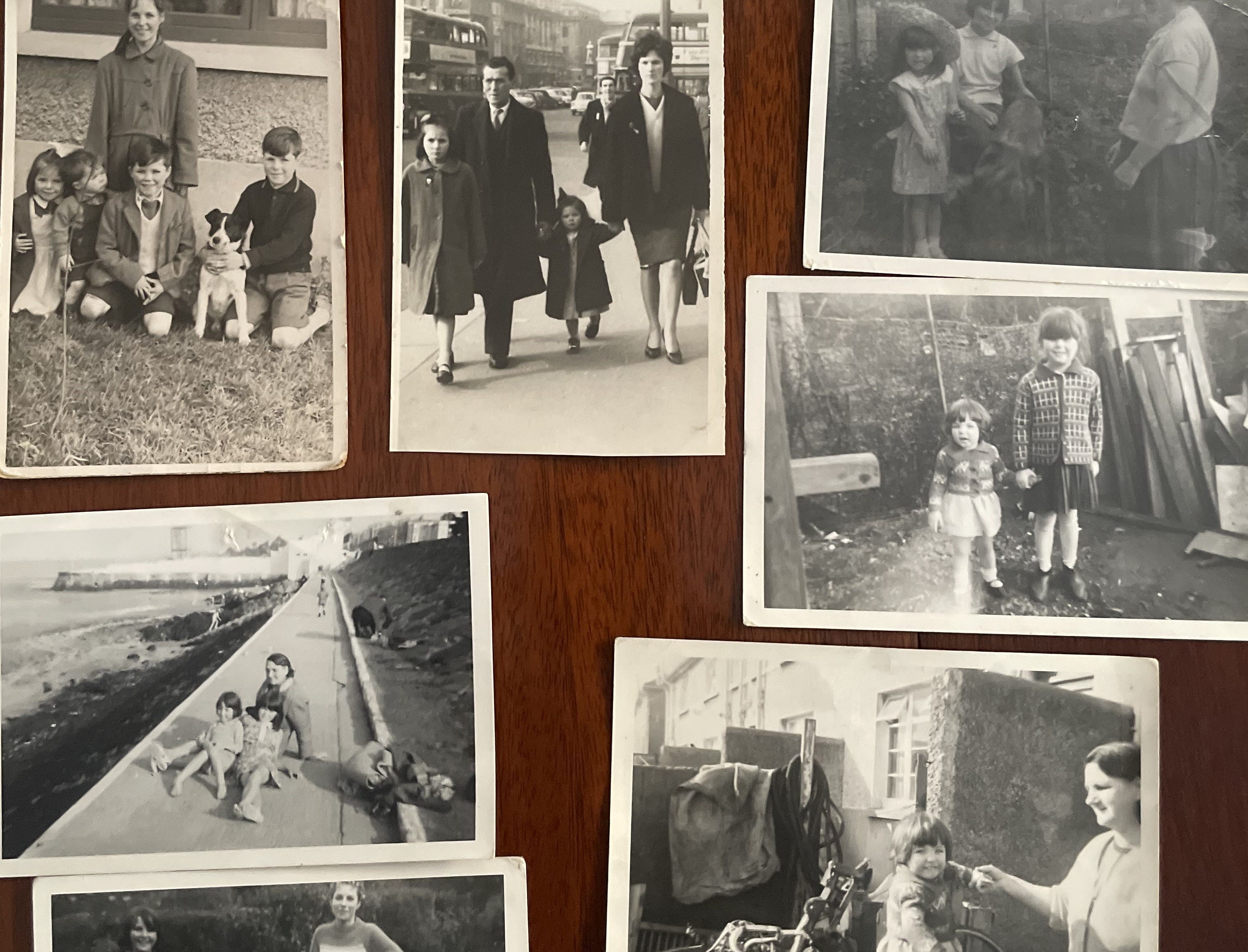
Kay grew up in Ireland in the 60s. She was one of eight kids in a two-bedroom apartment. When she was just 15 years old, Kay went to work in a sewing factory to support her family. She started by learning the different parts of a sewing machine, then worked her way up from sleeves, to collars, and to the fronts and backs of the jackets.
That’s where she met her best friend, Mags. Kay and Mags became inseparable from day one. They shared the same shifts. They walked to work together and spent long days bent over fabric. After work they would go out, drink, smoke cigarettes, and slowly come back to themselves. They’d laugh about who nearly lost a finger on a bad stitch. Compared bruises. Let the noise of the factory drain out of their ears.
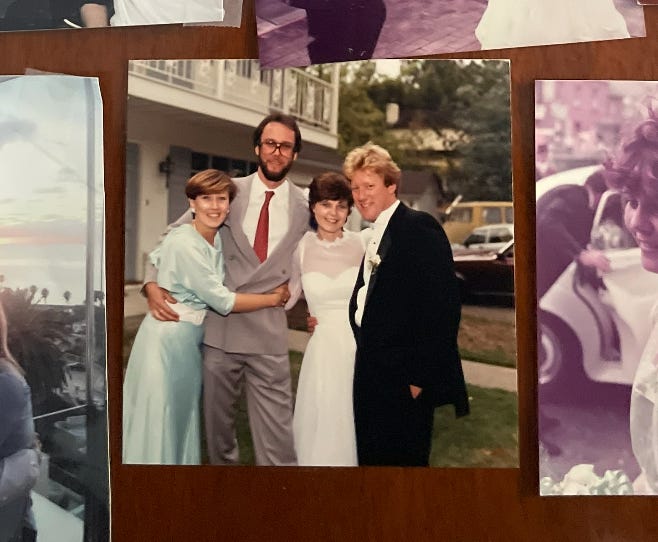
Mags ended up marrying the factory floor’s manager, an American fresh out of school, and Kay married his best friend. Both couples took a leap of faith and moved to the US and they each had three children.
To support their kids, Kay kept sewing. She set up a studio in the garage, and spent her hours making dresses for Irish dance competitions, halloween costumes, wedding gowns, suits, and many hems and alterations for her friends. Her children grew up watching their mom in that garage. They learned what care looked like in the repetition of that work, again and again.
For as long as I’ve known Leah, she’s always talked about wanting to learn how to sew, and Kay has been waiting for the chance to teach her. So when that sewing machine finally showed up in our kitchen, it was the moment Kay had been working towards.
One night, while Leah was pregnant with our second son, she was determined to get started after our son, Goose finally went to bed. She took the sewing machine out of the box and laid out all the pieces neatly on the table. But she couldn’t figure out how to set them up.
So, she did what most of us would do.
She pulled out her phone, took a photo of all the parts, and asked ChatGPT to explain how they worked. And it did! Instantly. AI told her what each piece was for and how to assemble them. And within minutes, the machine was up and running. It was amazing! Another magical moment of technology saving the day… but here’s the thing I keep thinking about: Leah didn’t call her mom.
Not because she didn’t want to or because they aren’t close. Kay’s phone remained silent across the country as Leah got what she needed from ChatGPT. Nothing went wrong. The technology worked perfectly. But the connection was lost.
I’ve been thinking a lot about those lost opportunities that happen not because technology fails to work, but because it works exactly as intended.
We’re gleefully replacing the messy negotiation of working with other humans with a compliant partner that never pushes back. We celebrate the gains in efficiency that come after automating parts of our jobs that previously involved collaborating with other people. It feels like even though we are gaining incredible superpowers, we’re losing something essential.
I asked ChatGPT (lol) if this feeling was new or original. As it turns out, that sense that something subtle changes as our technology get more powerful is part of an ongoing conversation several thinkers have been having over the last century.
In the 1930s, when industrial machines were taking over factories and cities, thinkers like Oswald Spengler argued that modern technology was not just a tool, it had become a civilizational force that trained us to see nature, labor, and even human life as material to be optimized, extracted, and exhausted.
By the 60s, radio and television were everywhere, and Marshall McLuhan warned us that absorbing reality secondhand weakens judgment. It reduces participation to spectatorship, and replaces lived experience with pre-framed versions of the world.
Then, in the 80s, when personal computers were making everyday life more convenient, Albert Borgmann argued that modern tech was pushing us away from the kinds of activities that shape us.
Borgmann wrote a book called Technology and the Character of Contemporary Life, where he talks about three concepts that finally articulate this feeling I’ve been having.
Formation
Formation is the idea that people become who they are through the structure of their daily activities. Not through what they believe or through what they aspire to. Through what they repeatedly do with their bodies, their attention, and other people.
You can trace this idea across different disciplines. About 20 years before Borgmann, a psychiatrist named Aaron Beck, explored something similar through Cognitive Behavioral Therapy. Its core insight is that what you do consistently plays a powerful role in shaping how you think and feel. Over time, those practices shape who you become.
Different domain, same underlying model. Now consider what happens when the activities that shape us begin to disappear.
Device paradigm
Borgmann calls this the device paradigm. At a high level, it’s the idea that modern technology delivers results while abstracting away the process that produced them.
For example: in pre-industrial life, most goods came bundled with practices. Warmth came from tending a fire, food came from cooking together, and music came from playing an instrument. Modern technology separates the outcome from the practice. Now warmth comes from a thermostat, food comes from a microwave, and music comes from a record player.
This feels like pure progress, but when our daily practices disappear, we lose the conditions that form our character over time.
Focal practices
Borgmann then introduces a final concept that serves as a counterpoint: Focal practices. A focal practice is an activity that asks something of you. They are not valuable because of the outcome alone. Their value lives in the doing of the practice itself. They tend to have 3 tenets:
It engages the body.
It demands sustained attention.
It connects us to shared contexts of people, places, and time.
When we participate in those practices, we create a feedback loop that, over time, produces human traits like patience, trust, and empathy
—
So, Formation teaches us that what we do shapes who we are. The Device Paradigm warns us that technology delivers outcomes without requiring our participation. If left unchecked, this removes opportunities for Focal Practices — the kinds of activities that train patience, attention, and care.
That made me wonder…
Is it possible to create technology that enables focal practices rather than displacing them?
This gives us another way to evaluate the technology we put into the world. Not only by what it can do, but by what it trains us to practice and therefore who it helps us become.
I’ve started to use this as a framework to select the clients I work with. Now, before starting a new project, I ask myself:
Is this product asking users to engage their body or giving them reasons not to?
Does this product require their sustained attention or passively delivering outcomes?
Is using this product connecting people to the world or pulling them away from it?
—
If Borgmann is right and who we are is shaped by what we do. Then, the tools that we build are not neutral. They’re moral in the deepest sense. They unconsciously rewrite how people spend their days. How their bodies move. What their attention is trained to notice. Who they turn to when they’re stuck.

As for Leah and the sewing machine, her first project was a quilt for our son, Theo. It took weeks. Nothing about it was efficient. Seams had to be redone. Measurements were off. They spent hours on FaceTime laughing and sharing stories while sewing. Leah would text photos to Kay late at night asking, “Does this look right?” and Kay would say, “No, slow down. Like this.”
When I asked her why she did it, she said “sewing a quilt isn’t about the quilt itself, it’s about seeing our son find comfort and warmth in the hours I spent working on something with my mom”
Another fine piece of work 👏